


Salome Erni
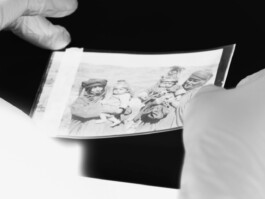
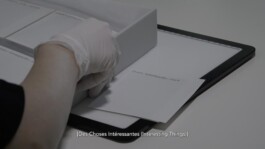
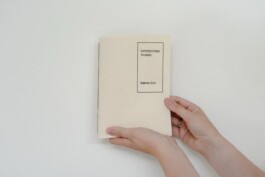
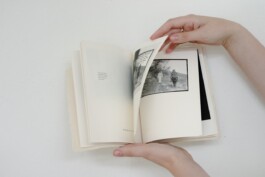
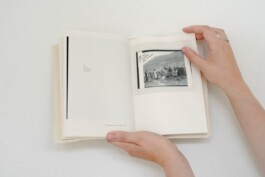
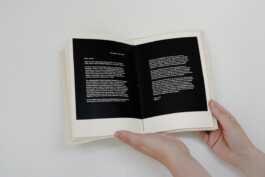
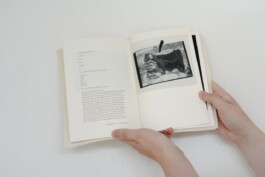
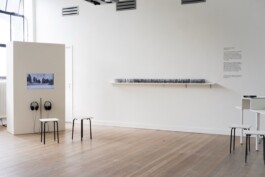
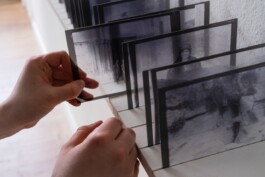
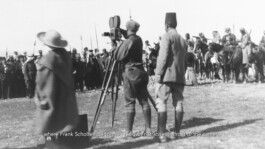
How to look at photographs while witnessing a genocide? The work “Interesting Things” is an insight into conversations that deal with archival images from Palestine. 59 negatives were found in an envelope that was labelled ‘des choses intéressantes” – Interesting Things – by the Dutch photographer Frank Scholten who travelled Palestine between 1921 and 1923. These photographs reflect colonial perspectives and the appropriating gaze cast upon the so-called “Holy Land.” At the same time, they depict scenes of Palestinian life before the Nakba, preserving what is continually threatened with erasure, expulsion, oppression and denial. ––– video essay ––– I, too, feel connected to these images, existing as matter at Leiden University Libraries, as photographs in exile, so close by. That is why, in the video essay, I chose to be present in front of the camera myself: handling the negatives and reciting the voice-over. By inverting the video footage – thereby turning the negatives into positives – the essay engages with the political act of looking. Who gazes at whom, and what power dynamics are at play? ––– book ––– Narratives are not inherent to photographs, but constantly in flux. This is especially apparent in the liminal space between photographs and annotations. What can be retrieved, what meanings can be infused, what should be added?
BLURRING THE LINES
FOSTERING TALENT AND NETWORKING IN VISUAL CULTURE
Program Leader
Partners
BLURRING THE LINES
FOSTERING TALENT AND NETWORKING IN VISUAL CULTURE
Program Leader
Partners
We use cookies. To find out more, read our Cookie and Privacy Policy.
| Cookie | Duration | Description |
|---|---|---|
| cookielawinfo-checkbox-analytics | 11 months | This cookie is set by GDPR Cookie Consent plugin. The cookie is used to store the user consent for the cookies in the category "Analytics". |
| cookielawinfo-checkbox-functional | 11 months | The cookie is set by GDPR cookie consent to record the user consent for the cookies in the category "Functional". |
| cookielawinfo-checkbox-necessary | 11 months | This cookie is set by GDPR Cookie Consent plugin. The cookies is used to store the user consent for the cookies in the category "Necessary". |
| cookielawinfo-checkbox-others | 11 months | This cookie is set by GDPR Cookie Consent plugin. The cookie is used to store the user consent for the cookies in the category "Other. |
| cookielawinfo-checkbox-performance | 11 months | This cookie is set by GDPR Cookie Consent plugin. The cookie is used to store the user consent for the cookies in the category "Performance". |
| viewed_cookie_policy | 11 months | The cookie is set by the GDPR Cookie Consent plugin and is used to store whether or not user has consented to the use of cookies. It does not store any personal data. |