Lester Kielstein
Osmosis
EDITION
school
École cantonale d’art de Lausanne, Switzerland
links
@lester.kielstein ↗
lesterkielstein.de ↗
My diploma project Osmosis is a photographic documentary research book in which I analyze the subtle but dreadful changes in Germany’s migration laws. Remembering the 80th anniversary of the end of World War II, one can observe a lingering rise of the far right over the last decade in Germany. Then as now, increasing uncertainty in global politics and the decline of economic prosperity push people to reject difference in search of a long-lost — and in reality, constantly changing — national identity. This newly emerging xenophobia finds its roots in the refugee crisis of 2015 and has reached its most recent pinnacle in the German federal elections of February 2025: the extreme right party secured over 20% of the total votes, reflecting public discontent with current migration laws. Coming from East Germany myself — having an Iranian mother who fled her home country during the revolution and a father who grew up in East Germany before the fall of the Wall — I was often confronted with hostility toward people from non-German backgrounds and never quite understood the stark contrast in moral compasses between home and public space.
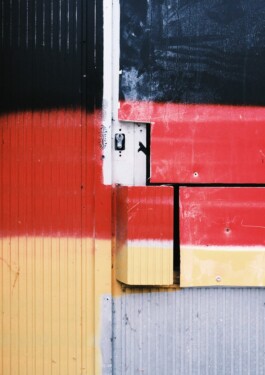
The book brings together a handful of different registers that are, for the most part, separated within the sequence. While the representation of the far right takes the form of a densely condensed block of protest pictures I took in different towns across Germany, migratory flux is symbolized by a more passive representation of human presence.
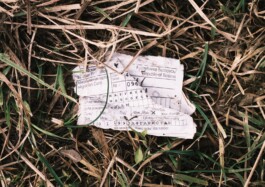
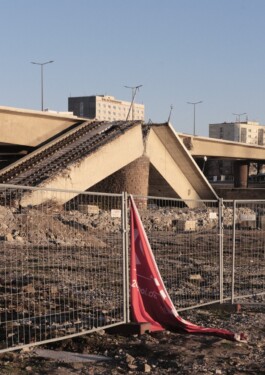
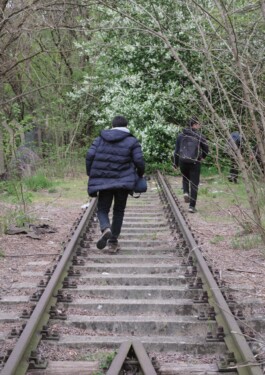
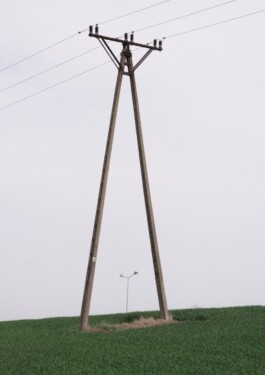
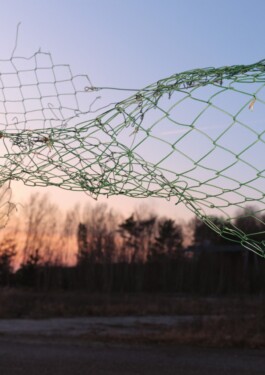
Referencing Eyal Weizman’s term the testimony of things, I present the traces of migrants’ presence that can be found along the Polish-German border: objects and documents that tell us who might have been there and thus testify to migratory movement. These different kinds of representations are meant to reflect each party’s presence in public discourse. A lot is said about refugees, but very little is actually brought to public attention by the refugees themselves.
This power imbalance — of who is shown, who is granted access across our borders, and who we choose to leave out — has become the central focus of my 13,000-kilometer journey across Germany in the making of this work. In conclusion, this project marks only the beginning of a paradigm shift in migration policy in Europe, seen through the lens of a territorial study on a national scale. The semi-permeable membrane we call our border is about to change in ways that were unforeseeable at its conception. Humanitarian principles are being lost.


Lester Kielstein
Osmosis
EDITION
school
École cantonale d’art de Lausanne, Switzerland
links
@lester.kielstein ↗
lesterkielstein.de ↗
My diploma project Osmosis is a photographic documentary research book in which I analyze the subtle but dreadful changes in Germany’s migration laws. Remembering the 80th anniversary of the end of World War II, one can observe a lingering rise of the far right over the last decade in Germany. Then as now, increasing uncertainty in global politics and the decline of economic prosperity push people to reject difference in search of a long-lost — and in reality, constantly changing — national identity. This newly emerging xenophobia finds its roots in the refugee crisis of 2015 and has reached its most recent pinnacle in the German federal elections of February 2025: the extreme right party secured over 20% of the total votes, reflecting public discontent with current migration laws. Coming from East Germany myself — having an Iranian mother who fled her home country during the revolution and a father who grew up in East Germany before the fall of the Wall — I was often confronted with hostility toward people from non-German backgrounds and never quite understood the stark contrast in moral compasses between home and public space.
The book brings together a handful of different registers that are, for the most part, separated within the sequence. While the representation of the far right takes the form of a densely condensed block of protest pictures I took in different towns across Germany, migratory flux is symbolized by a more passive representation of human presence.
Referencing Eyal Weizman’s term the testimony of things, I present the traces of migrants’ presence that can be found along the Polish-German border: objects and documents that tell us who might have been there and thus testify to migratory movement. These different kinds of representations are meant to reflect each party’s presence in public discourse. A lot is said about refugees, but very little is actually brought to public attention by the refugees themselves.
This power imbalance — of who is shown, who is granted access across our borders, and who we choose to leave out — has become the central focus of my 13,000-kilometer journey across Germany in the making of this work. In conclusion, this project marks only the beginning of a paradigm shift in migration policy in Europe, seen through the lens of a territorial study on a national scale. The semi-permeable membrane we call our border is about to change in ways that were unforeseeable at its conception. Humanitarian principles are being lost.
BLURRING THE LINES
FOSTERING TALENT AND NETWORKING IN VISUAL CULTURE
Program Leader
Partners


BLURRING THE LINES
FOSTERING TALENT AND NETWORKING IN VISUAL CULTURE
Program Leader
Partners